
Ulrich Baumann · 18 September 2026
Navigating Seasonal Content Refreshes While Preserving Engagement Signals Across Minimalist Storytelling Platforms
Seasonal content refreshes on minimalist storytelling platforms involve systematic updates to narratives and visuals that align with calendar shifts while tracking metrics such as session duration, scroll depth, and return visits, and platforms maintain these signals through structured data preservation techniques that avoid overwriting core user interaction patterns.
Researchers at institutions focused on digital media have documented how platforms operating with reduced design elements rely on backend analytics to monitor engagement before and after refreshes, and data from the Australian Communications and Media Authority shows that targeted seasonal adjustments in September periods correlate with stable user retention rates when metadata and interaction logs remain intact during the process.
Core Mechanisms of Engagement Preservation
Minimalist platforms prioritize clean interfaces that highlight text and simple imagery, which means seasonal refreshes must integrate new thematic elements without disrupting established user pathways, and observers note that techniques such as version-controlled content layers allow teams to swap seasonal references while retaining historical engagement baselines that algorithms use to rank stories.
Studies indicate that platforms employing A/B testing frameworks during refresh cycles achieve consistent signal strength because they isolate changes to surface-level elements like seasonal keywords or imagery tags, whereas deeper structural alterations often lead to temporary drops in measured interactions until recalibration occurs.
Timing and Preparation for September 2026 Cycles
September 2026 marks a key transition point where platforms prepare for autumn-themed storytelling arcs that incorporate harvest motifs or reflective narratives, and preparation begins months earlier with audits of existing engagement data to identify which signals prove most sensitive to thematic swaps, while teams map content calendars that phase in updates gradually rather than through abrupt overhauls.
Evidence from digital media tracking reveals that platforms scheduling refreshes in early September maintain higher continuity in user pathways compared to those implementing changes later in the month, since staggered rollouts give recommendation systems time to adjust without resetting accumulated interaction histories.
Technical Approaches to Signal Maintenance
Developers implement schema markup updates that tag seasonal content variations separately from evergreen sections, which preserves the integrity of core engagement signals across search and recommendation surfaces, and case examples show that platforms using modular content management systems can refresh narrative themes in isolated database fields while keeping user-generated comment threads and reading progress indicators unchanged.
Additional methods include caching engagement snapshots prior to any refresh deployment, allowing restoration of baseline metrics if initial post-update data deviates, and industry reports highlight that such practices reduce variance in time-on-page measurements during the first weeks after seasonal launches.
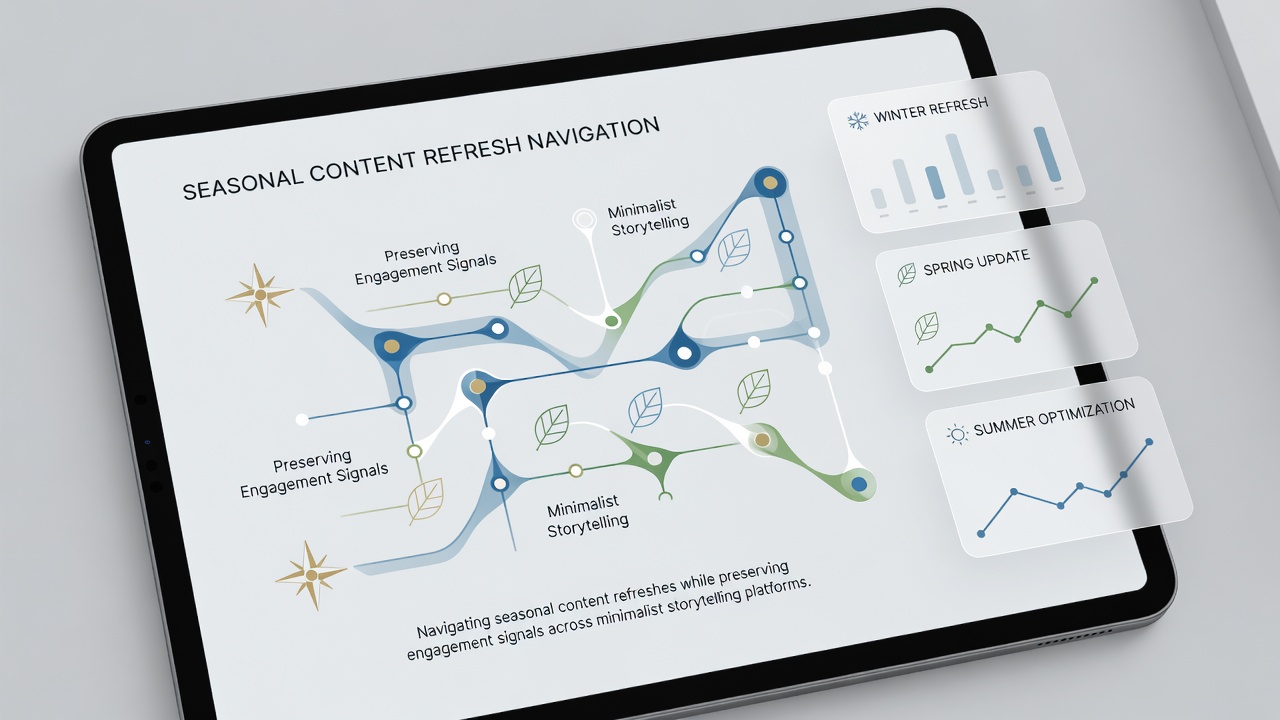
Cross-Platform Considerations and Data Patterns
Minimalist storytelling environments often span web and lightweight mobile applications, which requires coordinated refresh protocols that synchronize seasonal elements across endpoints without fragmenting user session data, and patterns observed in multi-device analytics demonstrate that unified tagging systems prevent signal dilution when users migrate between interfaces mid-narrative.
According to findings published by the Australian Communications and Media Authority in their digital engagement study, platforms that maintain consistent identifier structures across seasonal updates experience fewer interruptions in aggregated retention statistics, and similar observations appear in reports from the Canadian Radio-television and Telecommunications Commission regarding content adaptation practices.
Those managing these platforms frequently apply conditional rendering rules that activate seasonal overlays only for new sessions while preserving historical data streams for returning visitors, which supports sustained algorithmic familiarity with established engagement profiles.
Conclusion
Effective navigation of seasonal content refreshes on minimalist storytelling platforms centers on methodical preservation of engagement signals through layered data handling and phased implementation schedules, and September 2026 cycles illustrate how preparation aligned with calendar benchmarks supports continuity in user interaction metrics across diverse platform architectures.